History of the Universe in numbers
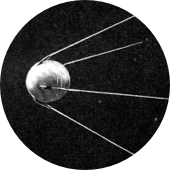
On October 4, 1957 the first world's artificial earth-orbiting satellite «Sputnik», which opened the Space Age in the history of mankind, was successfully launched
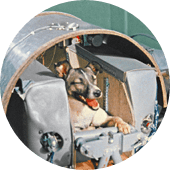
On November 3, 1957 the second spacecraft «Sputnik - 2» with the dog Laika aboard, the 1st animal in space, was launched
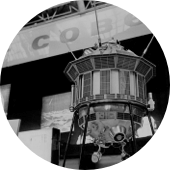
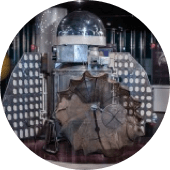
On October 4, 1959 one of the most famous automatic interplanetary stations «Luna -3» was launched. The back side of the Moon was shot for the first time in history
On February 12, 1961 the spacecraft reached the orbit of another planet for the first time. The Soviet Union launched the automatic interplanetary station «Venus - 1»
On April 12, 1961 Soviet astronaut Yuri Gagarin made a full orbit around the Earth on the «Vostok - 1» spacecraft and successfully landed in the Saratov region
On July 20, 1969 the American lunar module «Apollo - 11» performed the soft landing on the moon with two astronauts on board
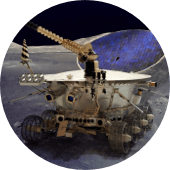
On November 17, 1970 the Soviet self-propelled vehicle «Lunokhod - 1» laid the first lunar track
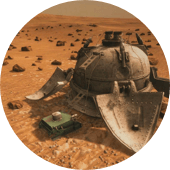
On December 2, 1971 the world’s first soft landing on the surface of Mars was made
On December 18, 1973 the Soviet Union launched the spacecraft «Soyuz 13» into orbit with crew commander Pyotr Klimuk and flight engineer Valentina Lebedeva on board
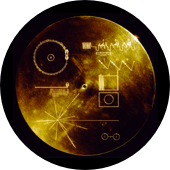
On September 5, 1977 the American spacecraft «Voyager-1» was launched to explore the distant planets of the Solar System
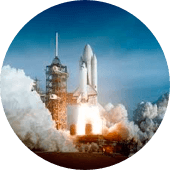
On April 12, 1981 the first flight of the first reusable transport spacecraft «Columbia» was made
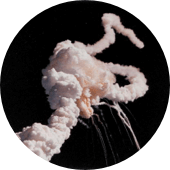
On January 28, 1986 the United States lost the first space shuttle. The spacecraft «Challenger» with 7 astronauts on board died at the launch
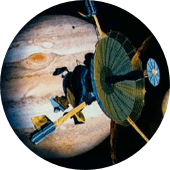
On October 18, 1989 the first artificial Jupiter satellite was launched. The USA launched automatic Galileo device
On April 24, 1990 Hubble Space telescope was launched into low Earth orbit. This is the largest such a project in the history of mankind
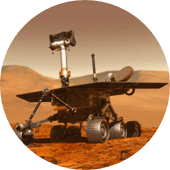
On December 4, 1996 the device called Mars Pathfinder was launched. It landed on surface of «red planet» on July 4, 1997
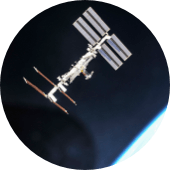
On November 20, 1998 the first element of the international Space Station entered orbit. The functional cargo block «Zarya» was sent into space
On April 28, 2000 the first space tourist was Dennis Tito. Russia sent «Soyuz- TM32» spacecraft with the first non-professional astronaut on board
On October 15, 2003 the first Chinese crewed spacecraft taikonaut «Shenzhou - V» made 14 orbits around the Earth in space
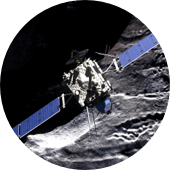
On March 02, 2004 the Rosetta automatic interplanetary station was launched, which made the first soft landing on a comet
On July 22, 2012 the first Belarusian Spacecraft (BS) was launched into orbit. The mission of the machine is the remote sensing of the Earth
On December 22, 2015 the first successful landing of the reusable first stage of the Falcon 9 rocket of the American private company SpaceX back to Earth
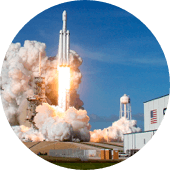
On February 06 , 2018 the first successful launch and landing of the used stages of the Falcon Heavy rocket, the most powerful of the existing launch vehicles, was made
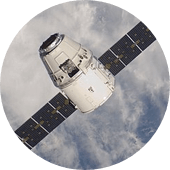
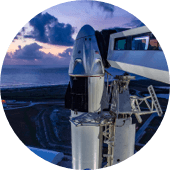
On May 30, 2020 Falcon 9 rocket with a Crew Dragon spacecraft was launched in the United States. This is the first manned launch in history, which was conducted by a private company – Elon Musk's SpaceX
Launch of the first artificial Earth satellite Sputnik - 1
October 4
1957
Launch of the second artificial Earth satellite Sputnik - 2 with a dog Laika on board
November 3
1957
The USSR launched the third artificial satellite Sputnik - 3
May 15
1958
Automatic interplanetary station Luna -1 came within 5,000 miles of the moon
January 2
1959
Station Luna -2 was the first manmade object to land on the moon
September 14
1959
The first American artificial satellite of the Sun «Pioneer - 4» was launched
March 3
1959
Launch of AIS Luna - 3, which photographed the invisible side of the moon from Earth for the first time in the world
October 4
1959
The first orbital flight of living creatures – dogs Belka and Strelka. They were successfully returned to Earth
August 19
1960
Yuri Gagarin made the first flight around the Earth on the spacecraft-satellite «Vostok» (USSR)
April 12
1961
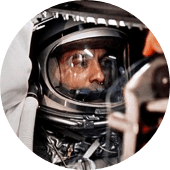
The first suborbital flight of cosmonaut A. Shepard on the Mercury spacecraft (USA)
May 5
1961
Herman Titov made a daily flight around the Earth on the spacecraft-satellite «Vostok - 2» (USSR)
August 6
1961
The first orbital flight of astronaut John Glenn on the Mercury spacecraft (USA)
February 20
1962
The first satellite for the Sun research of the OSO series (USA)
March 7
1962
The first artificial Earth satellite of the «Cosmos» series (USSR)
March 16
1962
The first group flight on the «Vostok -3» and «Vostok-4» spacecraft (USSR)
August 12
1962
The first female cosmonaut Tereshkova flew around the Earth on the «Vostok-6» spacecraft (USSR)
June 16
1963
Launch of a communications satellite «Sincom - 3» into a stationary orbit (USA)
August 19
1964
The flight around the Earth of cosmonauts Komarov, Feoktistov and Egorov on a three-person spacecraft «Voskhod» (USSR)
October 12
1964
The Mars flyby on July 15, 1965 and its exploration by the automatic interplanetary station «Mariner - 4» (USA)
November 28
1964
The first spacewalk of cosmonaut Alexei Leonov from the «Voskhod-2» spacecraft (USSR)
March 18
1965
The first space maneuver of the «Gemini-3» spacecraft (USA)
March 23
1965
The first automatic satellite in synchronous orbit of the «Molniya-1» series (USSR)
April 23
1965
The first automatic heavy research satellite of the Proton series (USSR)
July 16
1965
The first French satellite «Asterix - 1»
November 26
1965
Automatic interplanetary station «Luna - 9» made the world's first soft landing on the surface of the moon
February 03
1966
The first flight of the «Venus-3» spacecraft from Earth to Venus
March 03
1966
The «Luna-10» station became the first artificial satellite of the Moon
April 03
1966
The first docking of two unmanned spacecraft «Cosmos 186» and «Cosmos 188» was made
October 30
1967
The first return of the Zond-5 spacecraft to Earth after the Moon flyby
September 15
1968
The first docking of two manned spacecraft «Soyuz - 4» and «Soyuz -5» has been made
January 16
1969
The first landing of Neil Amstrong on the Moon
July 21
1969
Landing and start of work of the world's first planetoid «Lunokhod - 1»
November 17
1970
Space station «Salyut 11» became the first Space Station on orbit (USSR)
April 19
1971
The «Mariner-9» station became the first artificial satellite of Mars
November 13
1971
The «Mars-2» station first reached the surface of Mars
November 27
1971
The first landing of the automatic interplanetary station «Mars - 3» on Mars
December 02
1971
Launch of the first «Pioneer-10» spacecraft, which later left the boundaries of the Solar System
March 03
1972
A rocket society was formed in Germany
May 25
1973
«Apollo» (USA) and «Soyuz-19» (USSR) docked - this is the first «handshake in space»
July 17
1975
Soviet spacecraft «Venera - 9» became the first artificial satellite of Venus
October 20
1975
The first images were sent from the surface of Mars back to Earth by the artificial satellite «Viking -1»
July 20
1976
Artificial satellite «Viking-2» found and photographed frozen water on Mars
September
1976
«Voyager-1» and «Voyager-2» left Earth for a grand tour of the Solar System
August - September
1976
«Kosmos - 1000» has been launched - the beginning of the formation of the space navigation system «Cicada»
March 31
1978
The American spacecraft «Voyager-1», launched in 1977, arrived at Jupiter
March 05
1979
The American spacecraft «Voyager-2», launched in 1977, arrived at Jupiter
July 09
1979
«Pioneer-11» space probe (USA) arrived at Saturn and the first photos of the planets was taken
September 01
1979
The first flight of the reusable transport spacecraft «Columbia»
April 14
1981
The first samples of the soil of Venus extracted by the Soviet spacecraft «Venus 13»
March 01
1982
The first operational flight of the space shuttle
November 11
1982
The first launch of the American space shuttle «Challenger»
April 04
1983
The first American woman Sally Ride in space, on the space Shuttle mission STS-7
June 19
1983
The first launch of the «Zenit» vehicle from the Baikonur cosmodrome
April 13
1985
The first «Photon» spacecraft for research was launched
April 16
1985
The accident of the shuttle «Challenger», collapsed as a result of an explosion of an external fuel tank
January 28
1986
Launching the base module of the «Mir» space station into orbit
February 20
1986
The first space flight of the reusable space transport system «Buran» in automatic mode
November 15
1988
«Voyager-2» space probe landed on Neptune
August 25
1989
Launch of the «Discovery» shuttle with the Hubble telescope on board
April 24
1990
NASA's Magellan Interplanetary Station entered Venus orbit
August 10
1990
The first Russian cosmonaut was aboard the space shuttle
February 03
1994
The first female space shuttle pilot
February 06
1995
The first space shuttle docked with the station «Mir»
June 25
1995
The Galileo station became the first artificial satellite of Jupiter
December 07
1995
Landing of the «Mars Pathfinder» spacecraft on the surface of Mars
July 04
1997
Launch of the first Zarya block of the International Space Station
November 20
1998
The first American module of the International Space Station
December 04
1998
The first detailed exploration of an asteroid
February 14
2000
The station «NEAR Shoemaker» became the first artificial satellite of the asteroid 433 Eros
June 24
2000
American businessman Denis Tito became the first tourist to fly to outer space
April 28
2001
The «Shenzhou 5» spacecraft was launched from the Jiuquan Cosmodrome in China
October 15
2003
Cassini station became the first artificial satellite of Saturn
June 30
2004
The Huygens spacecraft successfully landed on Titan and sent a series of unique photos to Earth
January 14
2005
After a 174-day flight, the Deep Impact probe flew 10.3 km per second past the comet
July 04
2005
«Stardust» station delivered samples of the tail of comet «Wilda-2» to Earth
January 15
2006
The Kepler spacecraft was launched to find planets located outside the Solar system
March 06
2009
SpaceX is the first private company in the world to launch a Dragon spacecraft into orbit
December 08
2010
«MESSENGER» station became the first artificial satellite of Mercury
March 17
2011
NASA's «Dawn» spacecraft became the first ship to enter orbit around the asteroid Vesta
July 16
2011
Russia launches Spektr-P, which has become the largest space telescope to launch into orbit
July 18
2011
NASA Research Rover successfully landed on Mapce
May 22
2012
The American «Curiosity» spacecraft landed in Gale Crater on Mars
August 06
2012
The first flight to the International Space Station according to the "short" scheme
March 29
2013
The first test flight of the light version of the PH Hangar 1.2
July 09
2014
The New Horizons station got closer to Pluto by the shortest distance up to that time — 12,500 km
July 14
2015
The spacecraft of the Russian-European mission «ExoMars - 2016» has been launched
March 14
2016
The first launch of the «Soyuz - 2.1a» carrier rocket from the Vostochny cosmodrome of Russia was performed
April 28
2016
NASA created a planetary rover for the study of Venus
2017 year
The Chinese automatic interplanetary station «Chang'e - 4» made a soft landing on the far side of the Moon for the first time in history
January 03
2019
The Crew Dragon manned spacecraft has launched in the USA - the first launch of a private company Space X in history
May 30
2020